


When you first step off the plane at Kilimanjaro International Airport, the air feels different. It’s a mixture of sun-baked earth, wild sage, and an undeniable sense of possibility. For travelers arriving from the bustling cities of the USA or the historic streets of Europe, Tanzania isn’t just a destination on a map; it’s a homecoming to a world that feels ancient, raw, and pulse-raisingly alive.
This isn’t a trip about ticking boxes or glancing at animals through a window. A Tanzania photographic safari is a sensory overhaul. It is an invitation to slow down, to watch the light change across an infinite horizon, and to capture the fleeting moments of a world that operates on its own clock.
The Magic of the First Light
Your day doesn’t begin with an alarm clock; it begins with the “Bush Wake-up.” At 5:30 AM, there is a soft tap on your canvas tent door and the smell of freshly brewed Tanzanian coffee. Outside, the world is a deep indigo. This is the “Blue Hour,” the quietest and most electric time in the bush.
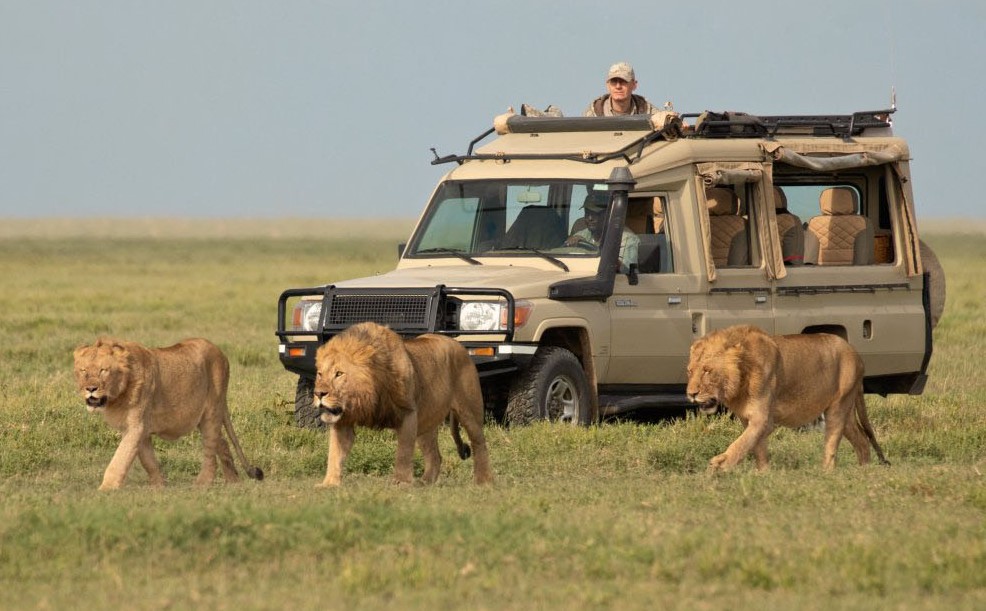
As you climb into your safari vehicle, the grass is heavy with dew, shimmering like silver under your headlights. This early start is the secret to the best safari photography. Predators—lions, leopards, and hyenas—are still on the move, their silhouettes cutting through the morning mist. There is a profound silence at this hour, broken only by the crunch of tires on volcanic soil and the distant, haunting low of a buffalo. When the sun finally cracks the horizon, it doesn’t just rise; it explodes in shades of violet and apricot, painting the acacia trees in a glow that no filter could ever replicate.
A Symphony of Sight and Sound

We often think of a safari as a visual experience, but for the photographer and the traveler alike, the soundtrack is what settles in your soul. Imagine sitting in total silence in the heart of the Serengeti. You’ve turned off the engine. At first, it’s quiet. Then, the layers reveal themselves.
You hear the rhythmic munch-munch of a zebra grazing just feet from your vehicle. You hear the “sawing” sound of a leopard calling from a riverine thicket—a sound like wood being cut. These sounds ground you in the present moment. For a creator, this sensory immersion is what leads to better art. You aren’t just taking a photo of a bird; you are capturing the vibration of the Lilac-breasted Roller as it takes flight against a cobalt sky.
The Drama of the Great Migration

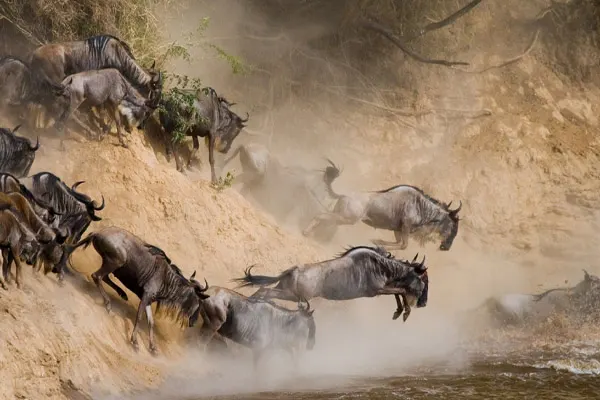
If your journey takes you to the northern plains between July and October, you will witness the Great Wildebeest Migration. To call it a “sight” is an understatement; it is an atmospheric phenomenon. Imagine over a million animals moving as one single, pulsing organism.
The dust kicked up by their hooves creates a permanent haze, a natural “softbox” that creates ethereal, moody lighting for your wildlife photography. The tension at the Mara River is palpable. You’ll sit with your long lens ready, your heart racing in sync with the herds. When the first wildebeest finally takes the plunge, the water erupts. It is a scene of raw survival, a drama of splashes, crocodiles, and sheer willpower. It is in these moments that you realize how thin the line is between life and death in the wild, and how beautiful that struggle can be.
The Hidden Masterpieces: Beyond the Big Five
While everyone comes to see the “Big Five,” the true seasoned traveler finds beauty in the details. Tanzania is a land of hidden masterpieces.
In Tarangire National Park, the landscape is dominated by the Baobab tree. These “Upside Down Trees” are prehistoric giants that have stood for a thousand years. Watching an elephant matriarch lean her wrinkled grey head against the silver bark of a Baobab is a study in textures. For a photographer, the contrast between the rough skin of the elephant and the smooth, ancient wood is a dream.
Then there are the cats. The cheetah, the fastest land animal, is a creature of pure elegance. Watching a cheetah scan the horizon from the top of a termite mound is like watching a high-fashion model on a runway. Every muscle is defined, every spot perfectly placed. In Tanzania, you don’t just “see” these animals; you observe their character.
The “Pole Pole” Pace of the Afternoon
By midday, the African sun is high and fierce. This is the time for Pole Pole—the Swahili phrase for “slowly, slowly.” The animals retreat to the shade, and so do you.
Returning to a luxury tented camp for lunch is an experience in itself. These camps are masterpieces of “low-impact luxury.” You might find yourself eating a gourmet three-course meal while a giraffe wanders past the dining tent to nibble on a nearby tree. This “down-time” is when the safari experience sinks in. You have time to look through your memory cards, but more importantly, you have time to breathe. The dry, heat-shimmering air of the afternoon has a way of clearing the mind of all the “robotic” stresses of modern life back in the West.
Cultural Connections: The Human Heart of the Wild

You cannot truly experience Tanzania without meeting its people. The Maasai, the Hadzabe, and the Datoga are the guardians of this land.
Visiting a Maasai Boma isn’t a “tourist trap” when done with respect; it is a bridge between worlds. The vibrant red of their shukas (robes) against the dusty ochre of the earth provides a stunning color palette for portrait photography. But beyond the visuals, it’s the conversation. Learning about their relationship with the lions and the land changes how you view the animals through your lens. You realize that this isn’t a zoo; it’s a shared ecosystem where humans and wildlife have coexisted for millennia.
The Golden Hour: Nature’s Grand Finale
As the clock hits 4:30 PM, the world turns to gold. In the photography world, this is our “working hours.” The harsh shadows of midday soften, and everything takes on a warm, romantic glow.
This is often when the best action happens. Lions wake up from their naps, stretching and yawning (the perfect shot!). Cubs begin to play, pouncing on their mothers’ tails. The light is so forgiving at this hour that even a beginner with a smartphone can take a world-class photo. But for the enthusiast, this is the time to play with “rim lighting”—positioning the vehicle so the sun is behind the animal, creating a glowing halo of light around their fur. It is a fleeting, magical window of time that ends with the most spectacular sunsets on the planet.
Sundowners and the Bush TV
As the sun dips below the horizon, we stop the vehicle. This is a sacred safari tradition: The Sundowner. With a drink in hand, you stand on the vast plains and watch the sky turn from orange to pink to deep bruised purple. There is a profound sense of peace that settles over the group.
Back at camp, the “Bush TV” is waiting. This is what we call the campfire. There is no real television here, and you won’t miss it. You sit around the licking flames, listening to the night sounds. A hyena’s “whoop” in the distance, the crackle of the wood, and the incredible storytelling of your Tanzanian guide. These guides are the unsung heroes of your journey. They aren’t just drivers; they are naturalists, historians, and often, incredible photographers themselves.
Looking Up: The Infinite Night Sky

For our guests from Europe and North America, the night sky in the Serengeti is a shock. Without city lights for hundreds of miles, the stars don’t just twinkle; they roar. The Milky Way is a thick, cloudy river of light stretching from horizon to horizon.
If you’ve ever wanted to try astrophotography, this is your playground. Capturing a silhouette of a flat-topped acacia tree against a billion stars is the ultimate “ending” shot for your safari story. It reminds you of your place in the universe—small, but connected to something magnificent.
The Dust Stays With You
They say that once you have the “dust of Africa” on your boots, you will never be the same. This is the true Tanzania safari experience. You will go home with thousands of photos—lions in the grass, elephants at the waterhole, the smile of a Maasai warrior—but the photos are just the shadows of the memories.
The real experience is the way your heart beat a little faster when that lion looked you in the eye. It’s the way the air smelled after a thunderstorm. It’s the feeling of total freedom as you drove across the open plains with no fences in sight.
Tanzania doesn’t just give you a holiday; it gives you a new way to see the world. It reminds you that the wild still exists, that nature is powerful, and that there is still room for wonder in the world.
Ready to Write Your Own Story?
Planning your first Tanzania photographic safari can feel like a big task, but you don’t have to do it alone. From choosing the right lenses to picking the perfect camps that cater to creators, we are here to make sure your journey is as seamless as it is spectacular.